



Cell & Gene Therapy
Real-Time Nanoparticle Size Monitoring for Transfection
- Direct measurement in IV bags
- No need to stop your process
- No sample extraction
- No compromise on sterility
Complex Size Monitoring in USP Transfection
The Challenges in Viral Vector Manufacturing
Polyethylenimine (PEI)-assisted transfection is revolutionizing modern medicine. But the production comes with major challenges: nanoparticle size matters a lot.
The therapeutic efficacy, stability, and safety of these products depend heavily on the formation of particles within precise size ranges.
Most pharmaceutical manufacturers are forced to time the nanoparticle formation processes blindly.
They rely on:
- Fixed mixing durations
- Offline sampling and analysis
- Guesswork during scale-up
Why? Because real-time, inline particle size measurement hasn’t been possible…until now.
Limits of Processes Without Inline Monitoring
- No process insight: Complex particle size changes during complex formation are invisible.
- Loss of sterility: Sampling exposes the process to contamination risks.
- Scale-up uncertainty: Container volume, geometry, and mixing dynamics change behavior.
- Aggregation risks: Sedimentation or aggregation can happen unnoticed.
Manufacturers end up reacting after the fact, at best.
At worst, entire batches are lost.
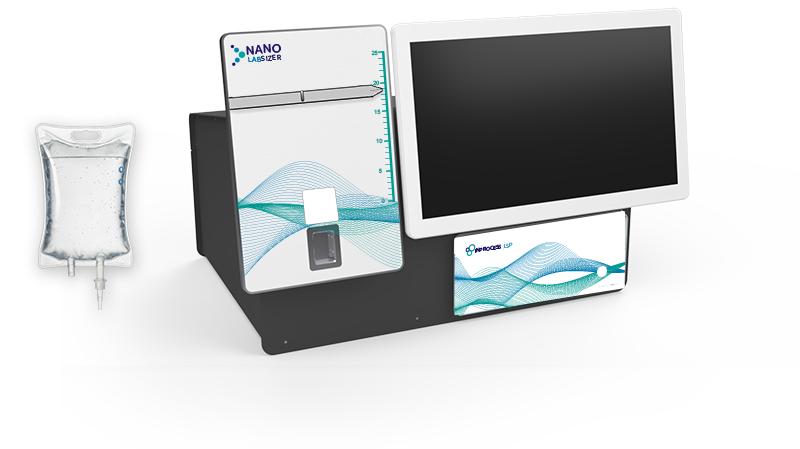
The NanoLabSizer
Unique Benefits
- Real-Time Insight: every 5 seconds: updated size readings
- Immediate feedback: to adjust mixing, quenching, feed rates
- Maintains Sterility: non-invasive, through-container measurements
- Scales with you: same instrument for R&D vials and 5L production bags
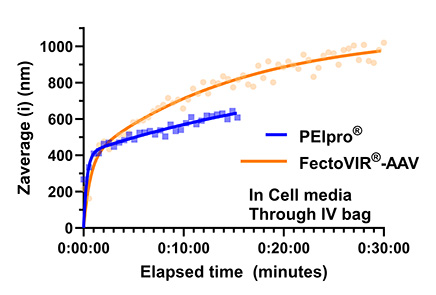
- Enhances Process Understanding: reveals kinetic profiles
NanoLabSizer: Real-Time Visibility, Zero Interruption
The NanoLabSizer, launched in 2026, enables real-time, inline, non-invasive nanoparticle size monitoring using Spatially Resolved Dynamic Light Scattering (SR-DLS).
- No need to stop your process
- No sample extraction
- No compromise on sterility
Measure directly through any transparent container, including:
- IV bags
- Glass or plastic vials
- Prefilled syringes
- Bioreactor bags
Benefits of Complex Size Monitoring in USP Transfection
Understanding:
helps to accelerate development, scale-up and validation
- Direct link between complex size and batch yield
- Continuous, data-rich size–growth curves instead of current offline approach
- More representative size data by avoiding sampling and measurement delays
Efficiency:
shorter time, less experiments, less manhours
- Eliminates destructive sampling and “sacrifice” transfection batches
- Continuous kinetics reduces the number of experiments
- No skilled lab personnel or sample handling needed
Direct savings:
costs of materials, waste, number of batches, labour
- No extra non-sterile batch for offline size analysis
- 15–30% higher titre/yield from more accurate, scalable recipes
- No sampling disposables or hands-on time thanks to continuous readout
Real-Time Insight. Sterile Process. Maximum Yield.
See More Than a Size: Understand the Whole Process
NanoLabSizer monitors:
- Nucleation
- Growth rates
- Aggregation phases
- Stabilization points
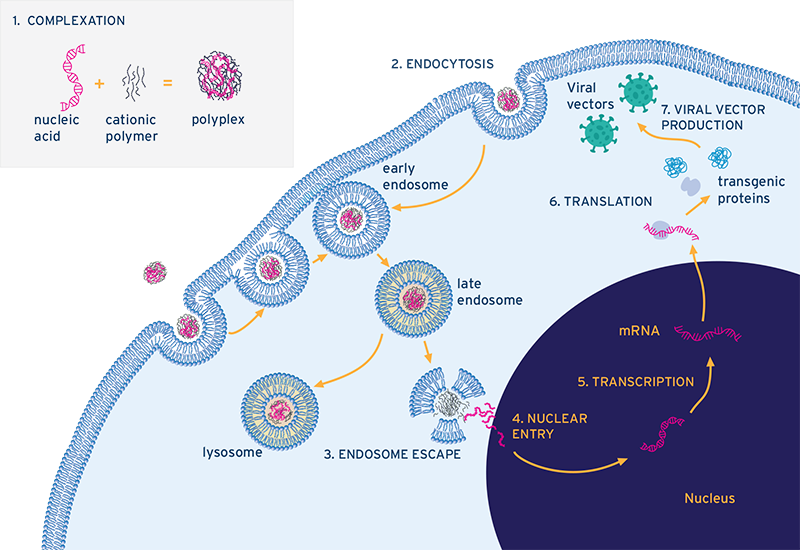
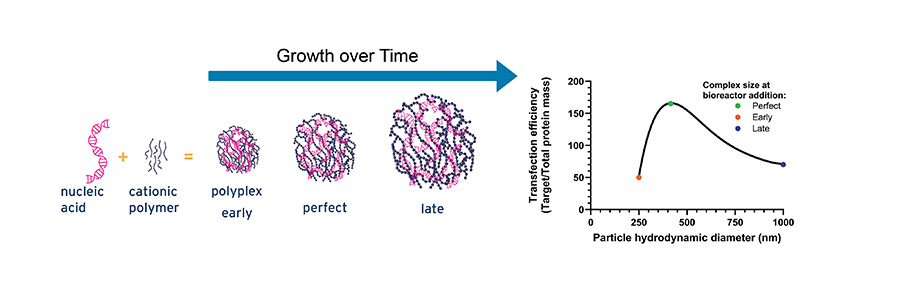
Optimizing the size of pDNA–PEI complexes is critical because both overly small and overly large particles undermine transfection performance.
See Your Nanoparticles in Action
Bring Transient Transfection Under Control
- Polyethylenimine (PEI)-assisted transient transfection is a critical step in AAV and LV vector production, but often still runs as a “black box.”
- NanoFlowSizer measures pDNA–PEI complex size in real time, directly in your bioreactor or mixing vessel.
- You gain live insight into how complexes form, grow, and stabilize during the process.
- This helps you keep complexes within the optimal size range for efficient cell uptake and vector production.
- The result: faster process development, fewer DoE cycles, smoother scale-up, higher viral vector yields, and fewer failed or suboptimal batches—saving time and costly materials.
Related Applications
Accessoires & Software
Modules
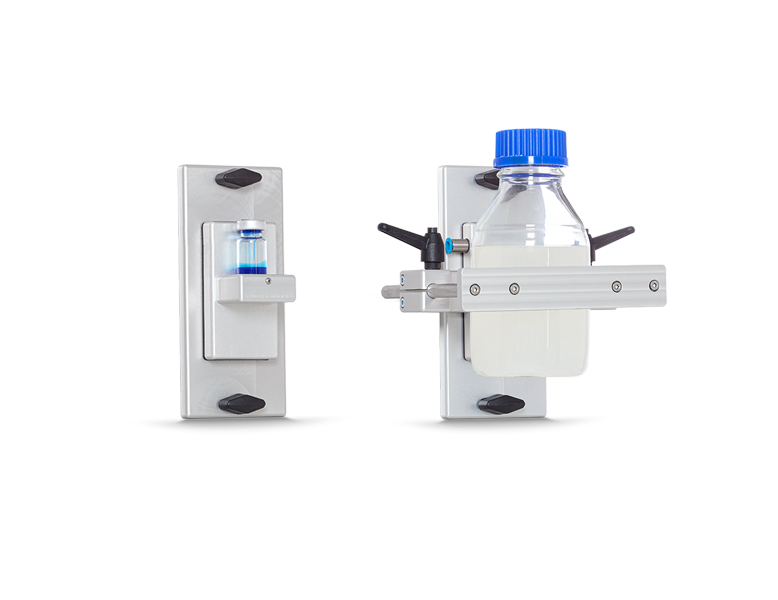
LPD only requires a sample to be at an appropriate measuring position. This is ensured by our static modules: vials, flasks and customized.
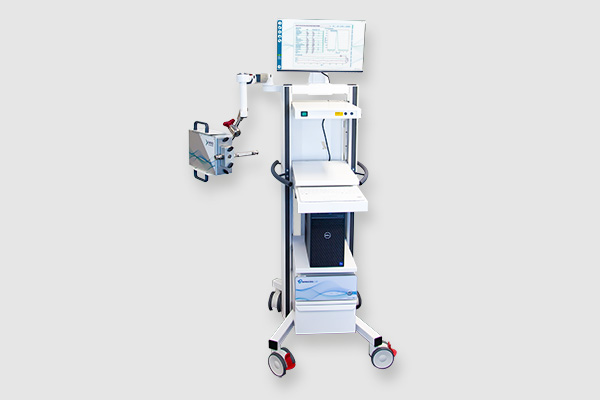
Trolley
Aliquam facilisis interdum mauris, venenatis eleifend libero dignissim in. Nullam vel arcu ligula. Sed ipsum ipsum,